
During my month in San Cristóbal, I was lucky enough to get away for a few weekend trips. San Cris is in the Mexican state of Chiapas, which is one of the most resource rich states in Mexico. In fact, when I was there, I got so many recommendations for places to visit that I couldn’t even make it out to one tenth of them.
But I loved the places I did visit. One thing that struck me was that, unlike a lot of other states (and countries), everywhere I went in Chiapas was fairly quiet, tranquil, and uncrowded and that made such a difference. It’s nice being able to feel like the only person around, and to close your eyes and hear the birds and running water without any human noises contaminating it. If you’re reading this, I 100% recommend getting out of town and visiting some (or all) of these places.
Cascadas El Chiflón and the Lagos de Montebello

Evelyn, my host in Oaxaca, had told me that she’d loved El Chiflón when she visited Chiapas, and she urged me to visit it too.
I’ve seen a lot of famous, unusual, and large waterfalls around the world so I wasn’t sure I’d be that impressed. But it was cheap to go on a tour to El Chiflón, and I liked the idea of having a day in which I didn’t have to plan or think or make any decisions, so I figured why not.
The tour was surprisingly wonderful. Except for me and one other guy, everyone on the tour was part of a Mexican family holidaying together. They joked that they were adopting the two of us, and treated us like we were old friends.

I think this little anecdote perfectly sums up the experience: At one point along our drive, I desperately needed to pee and there were no bathrooms nearby. Everyone went on the lookout for an appropriately sheltered spot where I could get away with relieving myself by the side of the road.
As soon as someone spotted one, they flagged the driver to stop, while someone else jumped out so they could be my lookout and keep me hidden from the road. It felt like a team effort, which I realise sounds a little strange given what I was doing, but it was nice.

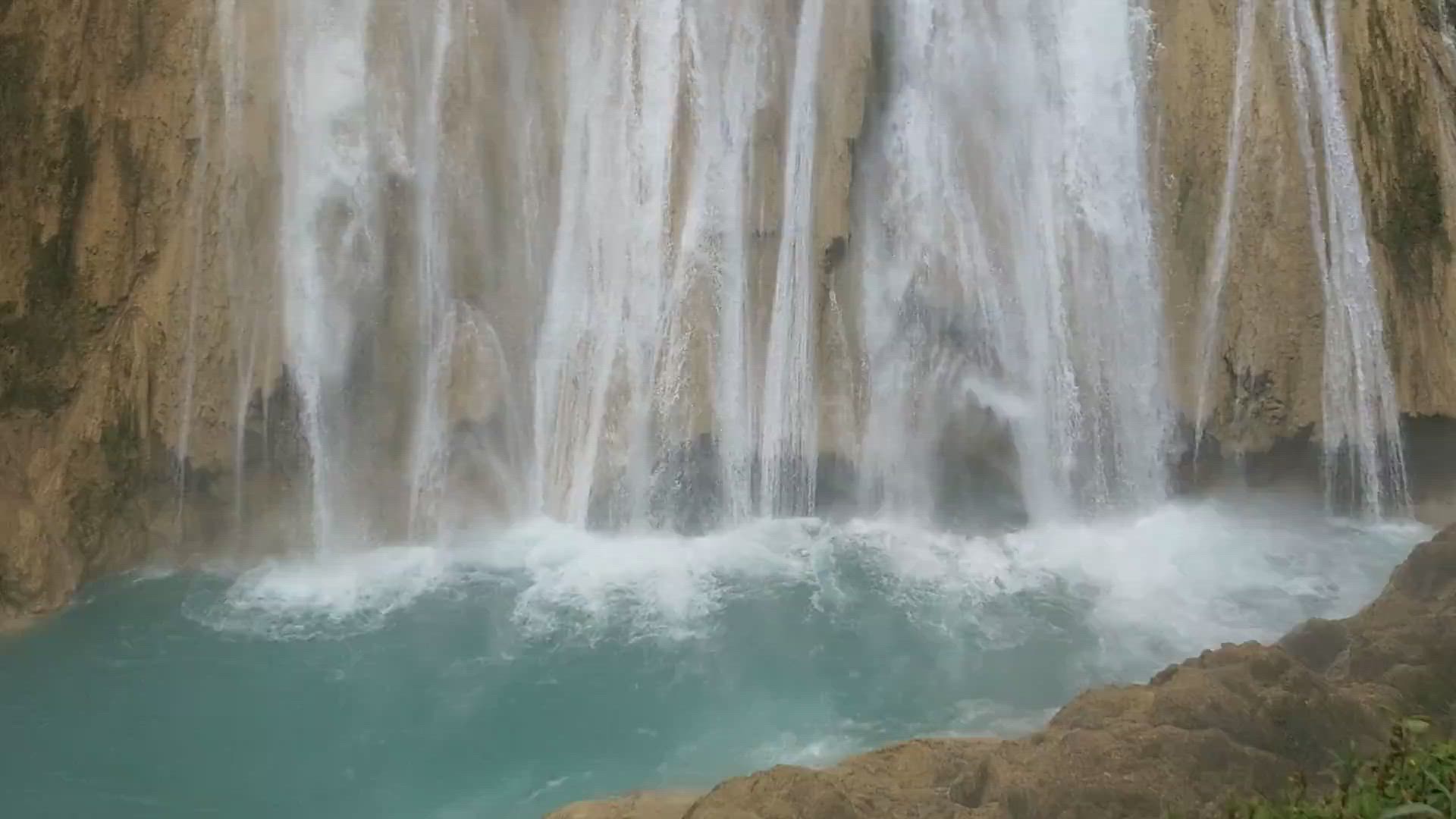
El Chiflón also ended up pleasantly exceeding my expectations. We’d gotten there super early and there was hardly another soul around. Between each of the falls – there’s 8 – the water meanders playfully along calm stretches of river in varying shades of blue, perfect for kicking your shoes off and wading through (which I did on my way back down).
It’s a long uphill hike to get to the largest falls. It was pretty cold at the start, so I took it at speed, sometimes almost running. I loved the whole experience of it – the falls on one side, lush forest on the other, and the sound of birdsong accompanying it all.
 //embedr.flickr.com/assets/client-code.js
The best part was at the largest waterfall, where a platform was set up in the ‘splash zone’. It’s not quite ‘under’ the fall, but it’s close enough that your entire body gets enveloped in a fine mist from the force of the falling water. It’s beautiful – the light’s refracting all around you, the waterfall towers in front of you and the sound of the crashing water blocks out everything else. It’s a spectacular sensory show of nature’s power.

The Lagos de Montebello, which we visited afterwards, felt so quiet and calm in comparison. They’re actually 59 different lakes dotting a pine forest located in a national park near the Guatemalan border. We only went to 5 – the Lagunas de Colores, which, like El Chiflón, also featured lots of different coloured waters.


We had to drive between each Lago, and to be honest, after seeing two I felt like the others weren’t that different. There were a lot of activities you could do at some of the lakes – horse-riding, paddling, rafting – but I was happy just to walk the outskirts, sit, and take it all in. My favourite was the last one – nobody else in my tour group wanted to walk down to the lake so I went alone, and I was literally the only person there. How often does that happen when you go somewhere on tour?
Bike trips


I love biking tours, and Chiapas has a lot – but they’re all private, and have a minimum of 2 people, which means that, travelling alone, I couldn’t go on any until my friend Arturo came to visit me for a weekend. I figured I might as well take advantage of his presence, and booked us into two tours on consecutive days.

The first was an AirBnB experience. We biked to Bishop’s Quinta, a farm from the early 19th century which still had some old machinery (no longer working) dating from that time. Most of the people there spoke Tzotzil, an Indigenous Mayan language, rather than Spanish, and wore traditional outfits made of wool and leather.

The Chiapaneco highlands were beautiful. It was a little intense, but the scenery was worth it – lots of sheep, lots of mountains, a river, and some caves.


Our second trip was to San Juan Chamula with Jaguar Adventours. Chamula’s this Indigenous village that’s especially famous for its church, the Iglesia de San Juan Bautista, which is still called ‘Catholic’ but is really syncretic.

Instead of pews, the floor is covered with pine needles. Worshippers clear a space to burn candles of different colours – green for a good harvest, white for food, orange for peace, and black either for protection from evil, or to place a curse on someone else. There’s copal resin burning everywhere, and mirrors on all the walls in between the statues of saints.


There’s also a lot of Coca Cola and pox, which most of the churchgoers are drinking and burping up (it’s believed that burping gets rid of malicious spirits). If someone’s sick or thinks they’re cursed, shamans go around laying their hands on them to absorb their illness into chicken eggs or cure them by waving live hens around. If it’s really bad, they’ll kill the hen.

There’s no photos allowed inside the church. Many Indigenous people believe photos steal their souls, so it’s pretty disrespectful to take photos fo them without their permission anyway. But you can Google it if you want to know what it’s like!


Other providers who are supposed to be good:
Fiesta Grande de Enero en Chiapa de Corzo
The “Fiesta Grande de Enero” is this annual celebration that takes place from the 4th-23rd of January in Chiapa de Corzo. Originally honouring local saints, it’s now also a time of giving thanks and celebrating all the good things that have happened to people over the last year.
 //embedr.flickr.com/assets/client-code.js
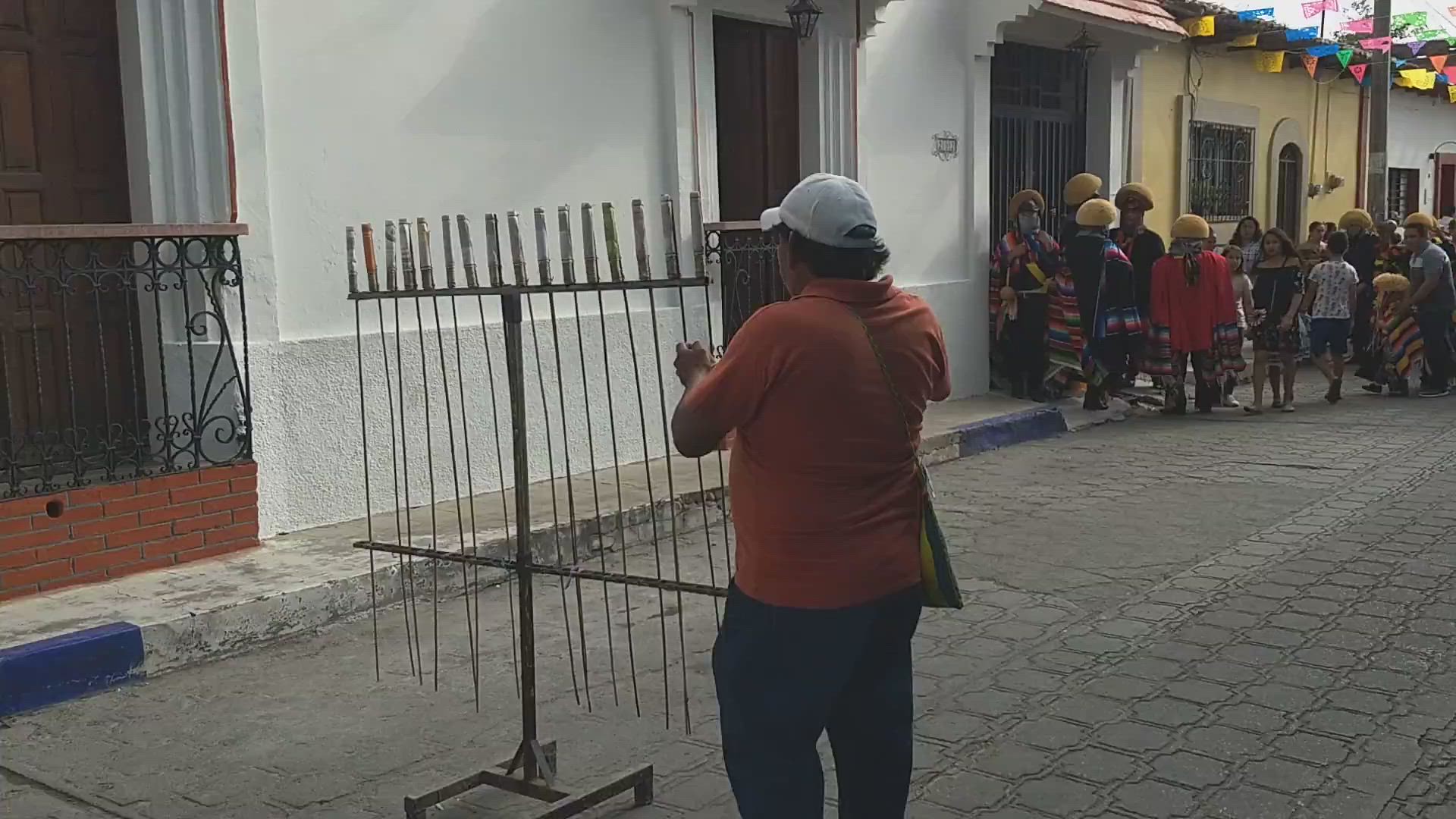
There’s a lot of events within the 11 days, including a staged naval battle near the end, but the thing I got told was particularly impressive was the Dance of the Parachicos. There’s a lot of varying stories about the history of the Parachicos, typically featuring a Spanish child being ill and getting healed, and then Natives using masks and wigs to disguise themselves as Spaniards (either to heal the child, or cheer him up).
//www.instagram.com/embed.js
Regardless of what the story is exactly, the Parachicos still wear lacquered wooden masks that apparently look like European faces (long, narrow, and pale) with yellow wigs made of ixtle, and colourful scarves, often with maracas in hand, or occasionally guitars and whips. Parachicos can be both male or female, but a lot of women wear colourful dresses instead, with lace trimming and wide skirts. They parade the streets, tapping their feet, shaking the maracas and calling out chants to which people reply ‘Viva!’
 //embedr.flickr.com/assets/client-code.js
It’s super cool to see that so many people dress up for this. The streets were full of people in costume, and at every square or open space there was a band set up and people dancing. All the houses along the streets had their doors open and there seemed to be parties inside too. A lot of bigger houses had bands playing on their front steps, so that people were dancing inside and outside the house. Basically there were just people dancing everywhere.
//www.instagram.com/embed.js
Sima de las cotorras
One of the Mexicans at my Intercambio told me about Sima de las cotorras. It was a giant sinkhole that you could rappel down, hike the inside of, and in which you could see lots of ancient cave paintings. And parrots.
//www.instagram.com/embed.js
I was sold as soon as he mentioned the rappel. But oh man, I did not know what I was getting into. To get to Sima, I had to wake up at 5:30am, walk to the ADO bus station, get a bus to Tuxtla, and a taxi to Sima – which altogether took something like 4 hours.
And then when I finally got to Sima, they told me that the rappel wasn’t working. Actually so many things weren’t happening. It was super disorganized. There were 4 people working there, and instead of having anything written down, you basically just asked them ‘can I do this’ and they’d say ‘yes’ or ‘no’ and tell you how much it cost.

Still, I didn’t regret it. The drive over was stunning, and once you get to Sima, you’re in a gorgeous National Park that you basically have to yourself. I don’t mean that metaphorically either – when I got there there were only two other people, both of whom were checking out. I was disappointed by the lack of activities, but I still had a lovely time reading and writing and meditating there.
I got to do the Perimeter walk too, and see some of those cave paintings. I’ve never seen or been inside a sinkhole before, and it’s fairly amazing. This one’s been around for thousands of years, which is kind of crazy to think about – it was already old when those ancient humans did all those cave paintings. It’s so big too, and although I didn’t get to go down and wander through it, the bottom is full of lush jungle. At dawn and dusk, hordes of parrots fly in and out, cawing loudly.

The reviews I’d read about Sima mentioned it being ‘a jewel in the rough’ and ‘a hidden wonder’. Everyone commented on how breathtaking it was. And yet the place doesn’t make much money and might not stay open much longer because nobody knows about it, and it’s so hard to find information about or get to.


It is such a wasted opportunity – it’s so badly managed that when a pair of girls drove up later that afternoon to stay there, they told them the bedrooms weren’t ready, but that they could sleep inside tents, with mattresses in them, inside the rooms – which is ridiculous given that the hotel has been around for years. Last I checked, their website wasn’t even working anymore. I hope someone comes in and helps them get things working better – or I might be one of the last people who got to experience Sima.
 The Way of the Potato